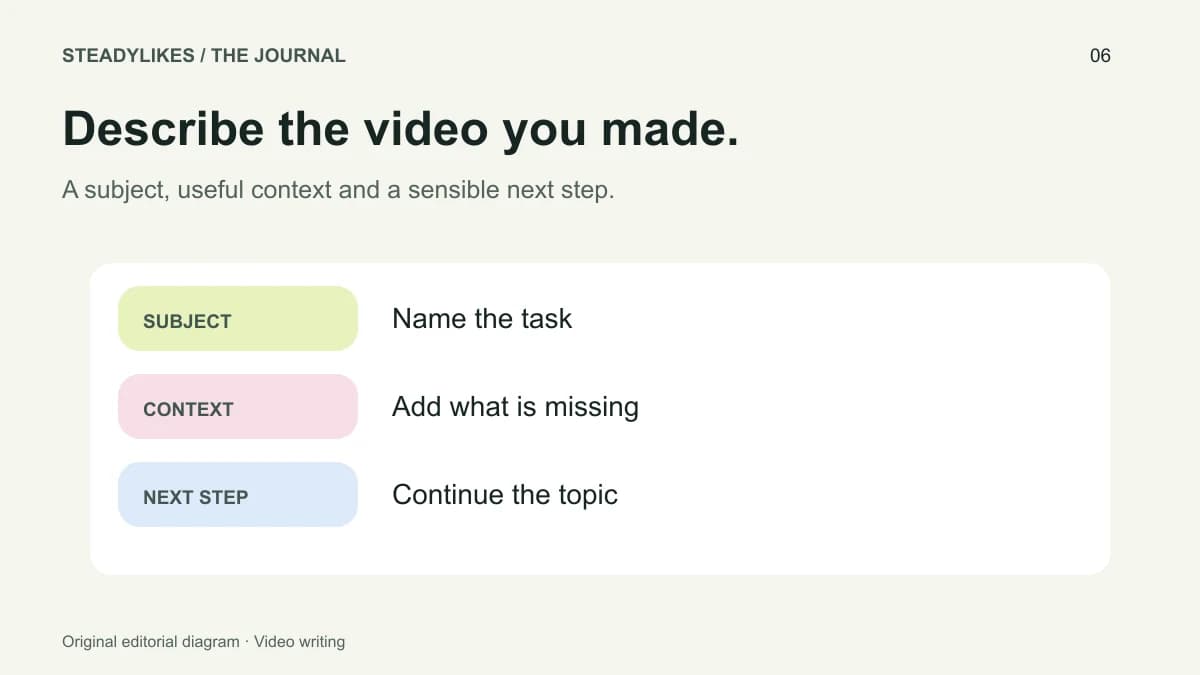
A useful TikTok caption explains the specific subject of the post, adds context the footage does not carry and gives the viewer a sensible next step. Relevant hashtags can label the topic, but they should not replace a readable description. Start with the video you actually made, then write the caption around that evidence.
This guide offers a practical writing process rather than a promised hashtag formula. The example captions are original illustrations, not results from a campaign or a claim about what TikTok will rank.
Separate the post description from spoken subtitles
The word “caption” can refer to two different things. The written post description sits with the upload and describes or contextualises it. Subtitles transcribe or represent the spoken content so it can be read while watching. Review both, but do not expect one to do the other's job.
A description such as “Checking the handle angle before attaching it” identifies the topic. Subtitles might contain the full explanation of where to place the marks. A viewer who cannot hear the audio still needs that explanation in an accessible form.
Begin with the task, object or question
Replace a generic introduction with the main subject. For example, “A simple way to label a sketchbook's material tests” tells the viewer more than “Another day in the studio.” The second sentence can then add context: “I keep the paper type and drying notes beside each swatch.”
Use the terms that accurately describe the work. If the video shows watercolour swatches, there is no need to include unrelated painting techniques to cover more possible searches. Precision helps the description remain useful to someone looking back through the account.
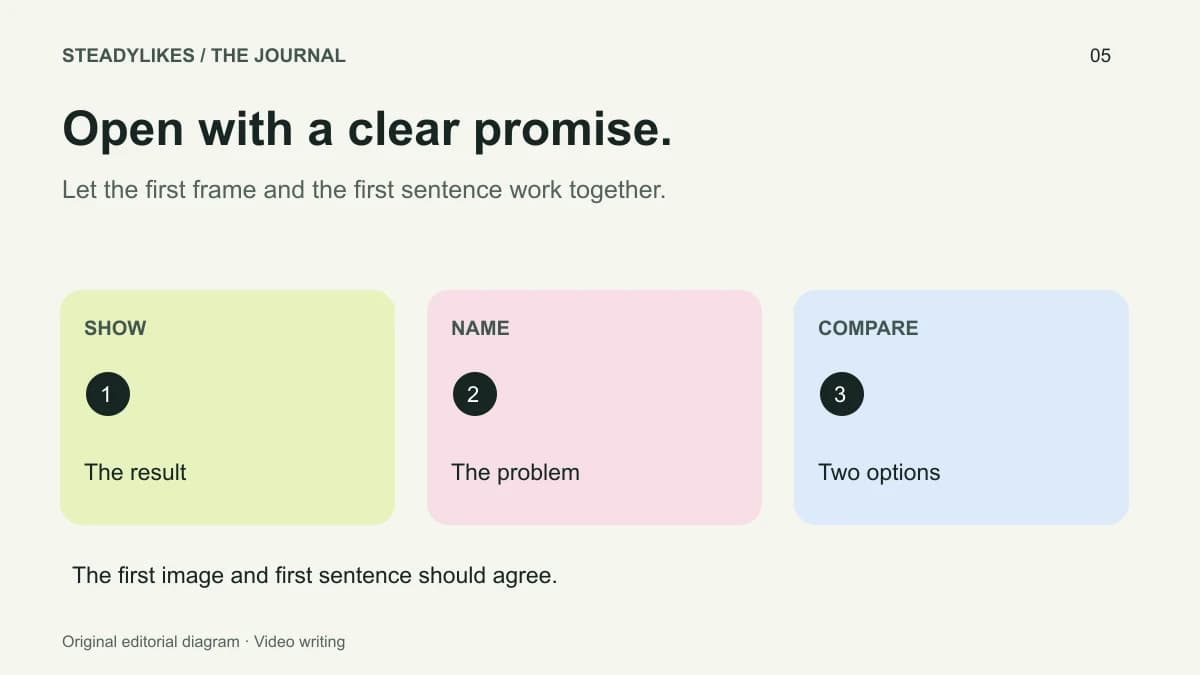
The video hooks guide uses the same principle for the opening: make the promise match the material. The description and the opening should reinforce the same topic rather than advertising two different videos.
Add the detail that would otherwise be missing
Ask what a viewer needs to know that is not obvious from the footage. It might be the tool being used, the situation in which a method is useful, or a limitation of the demonstration. Add that detail in plain language.
For an illustrative desk video, a caption could read: “My small drawing desk layout. Frequently used pens stay in the front tray; spare materials live on the shelf. This arrangement is for seated sketching, not a standing workbench.” The final sentence prevents a personal example from sounding like universal advice.
Avoid repeating every spoken sentence in the post description. Subtitles serve that purpose. Use the description to add orientation, explain a relevant condition or help someone identify the video later.
Choose a next step that fits the post
A tutorial may naturally end with a practical question: “Which step is hardest to see from this camera angle?” A comparison may ask which constraint matters to the viewer. A series instalment may point to an earlier explanation already available on the profile.
Do not ask for several unrelated actions just because there is room for them. A request to comment, follow, share, save and visit a destination can make a simple post feel less focused. Choose the action that helps the viewer continue the topic.
For profile-wide expectations, make sure the profile bio explains what the account will keep publishing. The caption should not have to reintroduce the whole project every time.
Use hashtags as accurate labels
List a few candidate labels privately, then remove any that do not describe the actual post. A pottery demonstration might reasonably use a subject label and a more specific process label. A popular unrelated tag does not make the video more relevant to the people seeking that subject.
There is no fixed winning number in this workflow. Use enough labels to describe the post without turning the caption into a repeated block of loosely related words. Check spelling and meaning before copying a tag from another creator.
Keep brand or series labels consistent if you use them. A recurring label can help you organise your own material, but do not describe it as a guaranteed discovery mechanism.
Three caption rewrites
| Vague draft | More useful version | What changed |
|---|---|---|
| Studio things today | Testing three pencil grades on the same sketchbook paper | The object and comparison are named |
| You need this tip | How I keep the mug handle centred while checking the attachment marks | The actual task is visible in the wording |
| Best setup ever | A compact desk layout for seated drawing with five frequently used tools | The context replaces the universal claim |
These are writing examples. Adapt the wording to footage you can show, and remove any detail that is not true of your own process.
Keep promotion separate from the explanation
If you are planning a TikTok likes selection, keep the final video link and selected quantity in your campaign notes. The post description should still help an ordinary viewer understand the content. Record service or promotional activity separately when reviewing your metrics.
Frequently asked questions
Should every caption be long?
No. A simple visual post may need little extra context. A comparison with important conditions may need more. Length should follow the explanation the viewer needs.
Can hashtags replace a descriptive sentence?
They usually leave more work for the reader. A sentence can explain how the labels relate to the footage and what the viewer is meant to learn.
Should I copy a competitor's caption?
Use the underlying audience question as research, then write from your own footage and perspective. Copying the wording can carry over claims or context that do not apply to your post.